International Women's Day: An Interview with Simone Oloman from Need It For Tonight
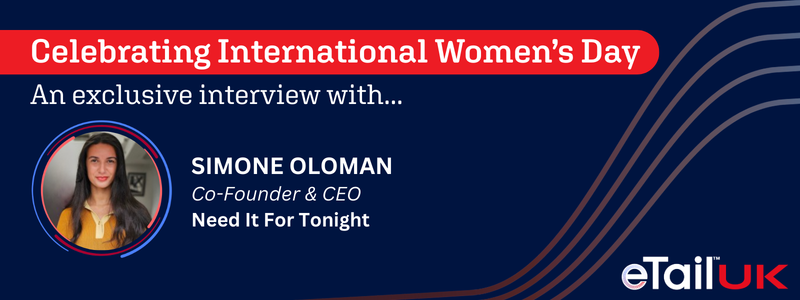
Can you tell us about your career journey so far? What first drew you to the retail industry, and how did you progress to your current role?
I’ve always loved retail. I started working on the shop floor at House of Fraser when I was 16 and it was my first real exposure to the energy of fashion and the importance of customer experience.
After graduating from the University of Leeds and moving to London, I ended up in the tech world, working for a conversational AI startup. My role involved selling and consulting with retailers and I led retail as a vertical. This gave me a unique perspective into the operational side of the industry and I was able to hear first-hand the pain points retailers were facing, as well as the frustrations customers were experiencing!
What stood out most was that retailers were inundated with customer queries, and over 90% of them were about delivery - where orders were, when they would arrive, or delays. They were turning to AI to manage the volume, but it made me realise they weren’t solving the root problem. Delivery wasn’t meeting customer expectations and it was directly impacting reputation and retention.
At the same time, I was experiencing that frustration myself as a customer. I’ve always loved fashion, but I was far more interested in the gap between inspiration and access. You’d see something online or have an event come up unexpectedly, and there was no infrastructure to get what you needed quickly. Retail hadn’t caught up with the way people actually live their lives.
That combination (seeing the problem from both the retailer and customer perspective) gave me the confidence to take the leap and build Need It For Tonight. We’ve built the infrastructure layer that allows fashion to move at the speed of intent, delivering outfits in 90 minutes or same-day. Today, as CEO, my role spans everything from fundraising and partnerships to product vision and brand, but at its core, it’s about building something that genuinely changes how people experience retail.
Looking back, were there any defining moments, challenges, or opportunities that had a significant impact on your career path or leadership style?
Building a company from scratch is a constant exercise in resilience.
One of the defining challenges has been fundraising and growing the business simultaneously. As a founder, you’re holding conviction in something that doesn’t fully exist yet, and your job is to bring other people into that belief - investors, partners and your team.
There have also been moments where I’ve been the only woman in the room, or the youngest person, or both. Early on, that can feel intimidating. Over time, it becomes empowering. You realise leadership isn’t about fitting an existing mould.
Those experiences have shaped my leadership style to be very transparent and human. I don’t believe in pretending to have all the answers. I believe in building a team where people feel ownership, where they can challenge ideas and where everyone understands the bigger mission.
As a leader, how do you foster a positive and inclusive work culture within your team?
For me, it starts with trust and autonomy.
We hire people because they’re exceptional at what they do, but it’s important that we give them the space to do it. I don’t believe in hierarchy for hierarchy’s sake. Great ideas can come from anywhere and it’s important people feel safe sharing them.
We’re also very open as a company. We share the realities of building a startup - the wins and the challenges (as there’s a lot of them!) That transparency builds trust and helps people feel genuinely part of the journey, rather than just employees.
Retail is an industry driven by culture, and culture comes from people feeling seen and valued. When people feel that, they do their best work and I know that from my own experience working at previous companies.
How do DEI initiatives play a part in your day-to-day work at NIFT?
DEI at NIFT isn’t a standalone initiative, it’s embedded in how we build. Fashion is one of the most diverse industries in terms of customers, so it’s essential that the teams building the future of retail reflect that diversity too.
This shows up in who we hire, the brands we partner with and the customers we serve. We work with a mix of emerging and established brands and we’re conscious about building a platform that creates opportunity, not just for the biggest players, but for the next generation as well.
It’s also about building a culture where different perspectives are genuinely valued.
From your perspective, how is work culture changing across retail, and what progress are you most encouraged by, especially for women in the industry?
One of the biggest changes is that retail is no longer seen as just an operational industry, it’s becoming a tech industry.
That shift is opening up more leadership opportunities for women, particularly in areas like product, technology and entrepreneurship.
I’m also encouraged by the number of women building companies. We’re seeing more female founders shaping the future of retail, rather than just operating within existing structures.
There’s still progress to be made, particularly in investment! Female founders still receive a disproportionately small percentage of venture funding. But the momentum is changing and the visibility of female leadership is improving every year.
For women who are earlier in their careers or aspiring to leadership roles in the retail space, what advice would you share based on your own experience?
Don’t wait until you feel ready as you probably never will! Confidence often comes after you do something, not before.
Put yourself in rooms where things are happening. Reach out to people, ask questions and don’t be afraid to admit what you don’t know. You’re never going to know everything (I certainly don’t!) and that’s okay. Some of the most valuable lessons I’ve learned have come from simply asking for help.
I’m still astounded by how many people I’ve reached out to (often completely cold) who have been willing to give their time, whether over a quick call or a coffee. Some of those people have gone on to become mentors and even members of my board, and they’ve had a huge impact on both me and the business.
And finally, back yourself. Retail is changing rapidly and there is a huge opportunity to shape what comes next. You don’t need permission to be part of that, you just need to start.
eTail UK are thrilled to announce that Simone will also be speaking at the conference in June 2026. Retailers and Brands now go free, register today!