Industry Content
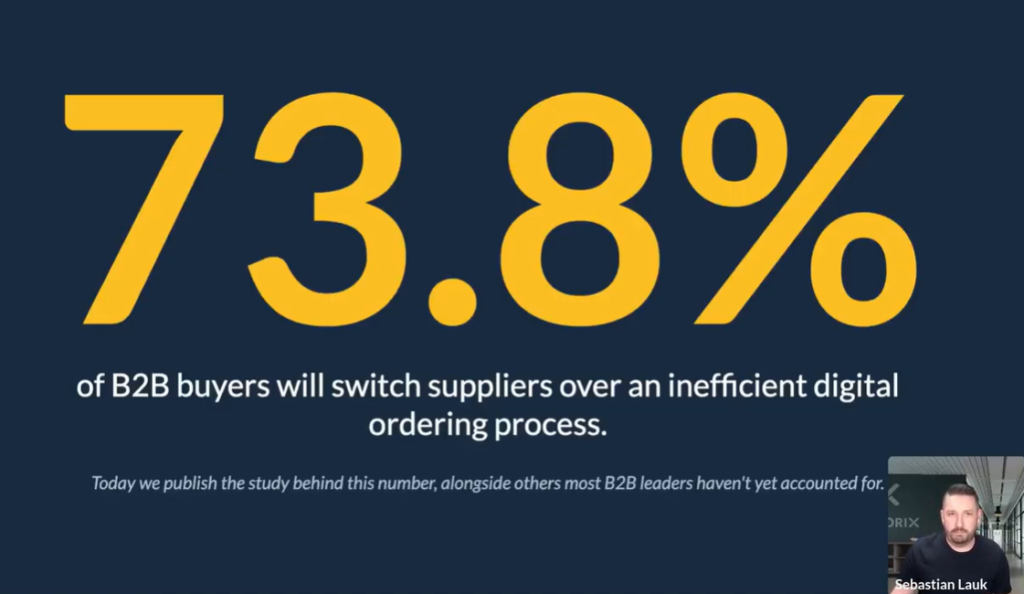
The Autonomous Commerce Shift Study 2026 [ON-DEMAND ROUNDTABLE]
See where you stand against 500 DACH B2B leaders A 60 minute live roundtable for heads of digital, commerce, and IT. Learn if they are ahead or behind on autonomous commerce. You leave the session with a clear read on where the market actually stands and where your organization sits on that curve.
2026 Omnichannel Benchmark Report
Is your marketing strategy hitting the mark? Gauge what’s working - and what needs work - with Klaviyo's 2026 Omnichannel Benchmark Report. Check the benchmark email and text performance across ecommerce verticals including apparel & accessories, food & beverage, health & beauty, home & garden, and more.

Why WhatsApp is the future of ecommerce messaging [2026 Report]
With more than 3 billion active users, WhatsApp is where your customers already are. Fast, mobile-native, and deeply personal, it’s the perfect space to build trust, start conversations, and drive more conversions. In this free guide, brought to you by Klaviyo's 2026 research, you’ll learn why WhatsApp is set to become the next must-have channel for ecommerce brands and how to get started.

Customer Loyalty in an era of Digital Disruption [On-Demand Webinar]
We’re living through an attention economy, where there is a constant demand for consumers’ attention from countless channels and platforms. How can brands cut through the noise? In this session, you’ll learn how to break down data silos to create seamless, customer-first journeys that drive repeat engagement and growth. Watch it now on demand!
The AI Readiness Report
eTail Insights and Upp.ai conducted a comprehensive research initiative in 2025 to understand how retail marketing leaders are navigating the evolution of paid media in an AI-first world. The study surveyed 200 senior executives responsible for shaping performance marketing strategy at some of the most prominent and innovative retailers across the UK.
Trust, Transparency, and the Future of Artificial Intelligence in Marketing
Marketing leaders are integrating artificial intelligence into their strategies and operations, with varying degrees of adoption, trust, and success. This report examines how marketing leaders are currently utilizing AI, what objectives brands have set for AI in the coming year, and what factors are influencing marketers’ confidence in AI-powered solutions. The findings reveal a marketing landscape in transition, where professionals recognize AI’s potential benefits, yet maintain healthy skepticism about its impact on their work.

The Future of AI in Retail and eCommerce
The following report explores how artificial intelligence (AI) is poised to transform retail and eCommerce over the next three years through innovative use cases and growing implementations. With 85% of the surveyed respondents planning to increase their investments in AI technology in the next year, more and more brands will compete based on their ability to use AI solutions to enhance both internal operations and the customer experience.

Future Customer Journeys in Retail and eCommerce
This report explores how effectively retail and eCommerce organizations are enhancing the customer journey to drive growth and customer loyalty. Drawing insights from a survey of industry leaders and presenting direct quotes from discussions at eTail Boston 2024, the report highlights key trends driving the future of the retail and eCommerce customer experience. The report also includes a notable case study outlining the use of storytelling and AI-powered personalization to drive meaningful customer shopping experiences. It ends with an analysis of what retail and eCommerce brands plan to do in the next 12 months to enhance customer journeys moving forward.

The AI video revolution in retail and eCommerce
Video content is now a cornerstone of modern retail and eCommerce marketing, with organizations creating unprecedented volumes of video assets to engage customers across multiple touchpoints. Many organizations now produce fifty to one hundred video assets each month. This shift toward video is being accelerated by artificial intelligence, which marketers can use to enhance video production, translation, and distribution. This report explores how leading retailers and eCommerce brands are using strategic video content and AI-driven interactivity to enhance training and the customer experience. Readers will gain insight into the future of AI-driven video and explore how they can drive measurable results in their own business through video interactivity and an AI-enhanced strategy.

Policy Abuse and Its Impact on Merchants: Global Benchmarks
Lenient return policies, generous promo code offerings, and reseller options may have helped grow the ecommerce ecosystem, but Riskified’s research shows that abuse of these same policies has become a significant problem for merchants. In fact, Riskified’s data show that policy abuse costs some merchants even more than chargeback fraud, and likely amounts to more than a hundred billion dollars of loss across the ecommerce ecosystem. Riskified commissioned the WBR Insights research team to survey more than 300 leaders from a variety of merchant companies across the world, each reporting more than $500 million in total annual revenue. Read the report to learn all the insights.

Successful Retail Strategies for the Stay-At-Home Economy: How European Retailers Are Adjusting Their Capabilities to Match Consumer Demands
More people than ever are purchasing products online, and they’re more likely to visit stores close to their homes than those near their workplaces. Retailers must adapt their strategies to meet these new demands. This study explores how retailers are adjusting their marketing, sales, and fulfilment capabilities to meet the moment and harness the buying power of the new stay-at-home consumer.

Releasing the Power of Digital Creative: Part 2 – A Perspective from Europe
With the approaching demise of the browser cookie, advertisers all recognize that maintaining the effectiveness of creative assets during campaign activation is more important than ever. Marketers are increasingly seeking solutions that will help them to better connect their big ideas to compelling, data-driven advertising campaigns. This report explores the obstacles leading to this challenge and other challenges associated with campaign activation. The report also analyzes the major opportunities EMEA advertisers have to improve performance and what role data and intelligence should play in their strategies.