International Women's Day: An Interview with Linda Cereda from Nike
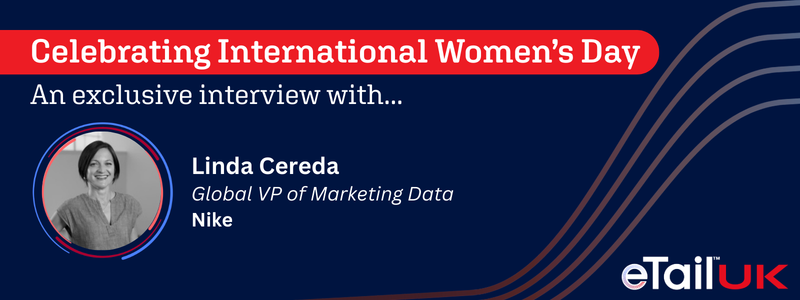
Can you tell us about your career journey so far? What first drew you to the retail industry, and how did you progress to your current role?
I started my career in consulting and investment banking. That gave me a strong base in how businesses work: financial and business acumen, storytelling and influencing skills. It was intense, but it taught me discipline and structure early on.
I then moved to Nike, where I spent 15+ years. My path there was not linear. I worked across strategy, retail, marketplace, digital, marketing, and later on in AI/Data and MarTech, both in the global headquarters as well as in Europe and China. Many of these roles were new businesses and new teams, built from scratch. That meant dealing with a lot of uncertainty, but also having the chance to shape and execute the strategy from day one.
Most roles were cross-functional and aimed at getting value for the business and for consumers by connecting data and technology with company processes and people, which became my superpower and source of energy!
What keeps me excited about retail is how close it is to real life. You can see the product, touch it, and experience the customer journey yourself. Early in my career, I worked on projects involving manufacturing machines and equipment. I often didn’t even understand what the product was! Retail is different. It’s human, visual, and very tangible, and that makes the work much more meaningful to me.
Looking back, were there any defining moments, challenges, or opportunities that had a significant impact on your career path or leadership style?
Many defining moments came from moving into roles where I felt uncomfortable. One example was my first job in digital commerce, coming from a more traditional strategy and marketplace background. Another was moving into data and AI from a business role, without being a technical expert.
What I learned is that you don’t need to know everything to make an impact. Early on, I thought leadership meant having all the answers. Over time, I learned it’s more about knowing what you bring, being honest about what you don’t and building a diverse team around you who can complement your skillset and move the vision forward.
In data and AI, for example, my value was not writing code or picking the best Machine Learning model. It was understanding how to drive business value, how to work in a complex global organisation, and how to connect teams that don’t always speak the same language. I relied heavily on deep experts in my team and cross-functional partners, and together we made better decisions than I ever could have alone.
Those moments changed my leadership style. I focus much more on clarity, trust, and making space for others to do their best work.
As a leader, how do you foster a positive and inclusive work culture within your teams?
For me, diversity goes far beyond gender. It includes different industries, different functions, and different parts of the world. Teams work better when not everyone has the same background or career path, while having a common vision and values.
I truly believe the best ideas can come from anyone. But that only happens if people feel safe to speak up. I spend a lot of time encouraging teams to share ideas, challenge decisions, and say when they disagree.
One of the most dangerous things in leadership is a room full of “yes” people. If everyone agrees with you all the time, progress slows down. Real progress comes from respectful debate, different views, and sometimes uncomfortable conversations.
My role as a leader is to make it clear that speaking up is not a risk; it’s expected.
How do DEI initiatives play a part in your day-to-day?
In practice, this means building teams with different perspectives and giving people chances to move across roles, functions, and locations. Rotating talent helps break silos and helps people see the business more clearly.
Diversity also matters because customers are diverse. If teams all think the same way or come from similar paths, it becomes harder to truly understand the people you serve.
This isn’t about programs or statements. It’s about daily choices: who you hire, who you listen to, who gets visibility, and who gets stretched into new roles.
From your perspective, how is work culture changing across retail, and what progress are you most encouraged by, especially for women in the industry?
One shift I find encouraging is the growing acceptance of flexibility in how we work and lead. Retail is still fast and demanding, but there is more openness to different ways of working, different life stages, and different definitions of commitment. This matters a lot for women, because talent is often lost not due to lack of ambition, but because the system is too rigid.
I also see progress in how leadership is being measured. There is more focus on outcomes and impact, not just presence or hours. When flexibility is treated as a strength rather than a compromise, it creates space for more women to stay, grow, and lead.
At the same time, Gen AI is changing who can contribute and how. You no longer need deep technical expertise to work closely with advanced tools. What matters more is the ability to connect the dots, ask good questions, think critically, and understand people. These skills are becoming central to success in retail, and many women are naturally strong in them.
For me, real progress is when women no longer have to choose between how they lead and whether they lead at all.
For women who are earlier in their careers or aspiring to leadership roles in the retail space, what advice would you share based on your own experience?
I’m generalising, but many women, myself included, tend to focus too much on their gaps. We spend a lot of time thinking about what we don’t have instead of what we already have. In reality, you don’t need a perfect skillset to grow or to take on bigger roles.
My advice is to focus on your strengths and make them visible. Understand what makes you different and lean into that. That’s often your real advantage.
At the same time, the best way I’ve experienced learning is very practical. First, do your current job well. Build confidence by delivering results and being dependable. That creates trust and gives you room to grow.
Then, as you become more confident, look for opportunities that sit next to your role. These ‘adjacent’ experiences can help you learn new skills, explore topics you’re curious about, and meet new teams without needing to make a big career jump. For example, I was the General Manager of SNKRS, which was a business role. Over time, I became very interested in how AI and machine learning could help create fairer experiences for our members. I started asking questions, learning from experts, and building strong relationships with machine learning engineers. That curiosity and those connections eventually led to one of the most successful deployments of AI I have experienced and led me into a Data and AI role. You don’t have to know everything up front. Stay curious, follow what genuinely interests you, and don’t wait until you feel 100% ready. Growth often comes from action, not from checking every box.
eTail UK are thrilled to announce that Linda will also be speaking at the conference in June 2026. Retailers and Brands now go free, register today!